

You might be staring at a crooked smile in the mirror, or watching your child hide their teeth in photos, and wondering why orthodontic treatment still feels like such a big, uncertain step. You hear about clear aligners, 3D scans, digital plans, and Invisalign in Carmel, and it can start to sound more like tech jargon than healthcare. You just want to know one thing. Will this actually work, and will it be worth the time and money.end
That mix of hope and worry is completely normal. Orthodontic treatment affects how you look, how you feel about yourself, and often your budget for years. The good news is that modern digital tools are not just shiny gadgets. When they are used thoughtfully, they can make care more accurate, more predictable, and often more comfortable.
In simple terms, digital orthodontic treatment lets your orthodontist see more, plan better, and adjust treatment faster. That can mean shorter treatment times, fewer surprises, and a clearer picture of what your smile will look like when everything is finished.
So where does that leave you. It helps to understand what is actually changing, what problems these tools solve, and how you can use this information to choose the right orthodontist and the right plan for you or your child.
Why traditional orthodontics felt uncertain, and how digital tools change that
Think about how braces used to work. The orthodontist would take goopy impressions, study 2D X rays, look at your teeth, and then place brackets by hand. Adjustments were based on experience and a trained eye. Many orthodontists did excellent work this way, but there were real limits.
Here are some of the problems people often faced.
Visits could feel long and uncomfortable. Impressions triggered gag reflexes. Braces adjustments were sometimes painful and seemed mysterious, because you could not really see the plan in front of you.
Results could be hard to picture. You might be told, “Your teeth will be straighter in about 2 years,” but you could not visualize your future smile or understand exactly how your bite would change.
Plans were harder to customize. Every mouth is unique. With fewer digital tools, it was more challenging to test different treatment approaches on a computer first. That sometimes meant more trial and error in real life.
Because of this tension, you might wonder. If my orthodontist uses digital technology, does that actually change my experience, or is it just a fancy way to market the same old treatment.
Here is where the shift is real. Modern digital orthodontics combines 3D imaging, computer guided planning, and data from thousands of previous treatments to improve accuracy and predictability. Research in digital dentistry and data science, like the work highlighted by the National Institute of Dental and Craniofacial Research, shows that digital data can support more precise, personalized care when used well. You can see more about that direction in dental care in this overview on how data science and digital dentistry are improving dental care.
What does “digital orthodontics” actually include for you
Digital technology in orthodontics is not one single tool. It is a group of methods that work together to support better results. Here are some of the most common pieces you might experience.
- 3D digital scans instead of gooey impressions
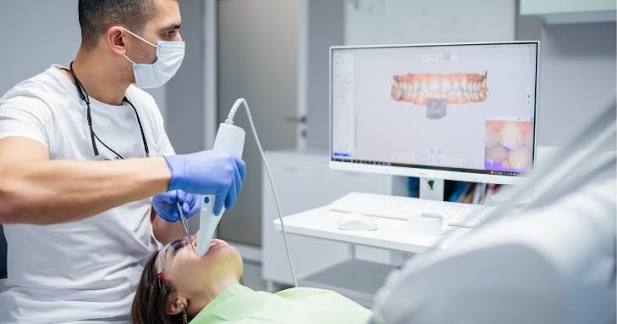
Many orthodontists now use handheld scanners to create a 3D model of your teeth. You simply sit in the chair while they move a small camera around your mouth. No trays. No sticky material. For you, this usually means more comfort and less mess. For the orthodontist, it means a very precise, detailed model that can be measured and adjusted on screen.
- 3D imaging of bones and roots
In more complex cases, a 3D X ray (often called CBCT) can show not just the teeth you see, but the roots, jawbone, and airway. This kind of imaging can reveal hidden issues, like impacted teeth or root positions that might cause trouble if they are moved the wrong way. Studies have shown that these images can change treatment decisions and improve safety when used thoughtfully. For example, research on digital treatment planning and CBCT has shown more precise control of tooth movement and better evaluation of root positions. You can see an example of this type of research in a paper on 3D digital orthodontic planning and tooth movement.
- Computer guided treatment planning
Once your orthodontist has digital models and images, they can use software to simulate how your teeth will move over time. They can test different approaches before touching a single tooth. For clear aligners, this is how each tray is designed. For braces, digital set ups can guide where each bracket goes and how wires are bent.
For you, this often means you can see a virtual “before and after” early on. That can be reassuring. It also helps you understand why certain extractions, rubber bands, or jaw treatments might be suggested.
- Custom appliances and aligners
When your orthodontist uses digital planning, they can order or fabricate appliances that are tailored to your exact teeth and bite. This might include custom brackets, wires, expanders, or aligners. Research on digitally designed aligners shows that while not every movement is perfect, accuracy improves when movements are carefully planned and controlled. One review of clear aligners, for example, found that certain movements like tipping and intrusion can be quite accurate when digitally planned and monitored closely. You can read more in a summary of aligner accuracy and planning published on PubMed.
- Remote monitoring and digital check ins
Some orthodontists now use apps or photo based systems so you can send images of your teeth between visits. That can reduce the number of in person appointments, catch problems earlier, and help the orthodontist adjust your plan in real time.
So what does all this mean in everyday terms. It means digital orthodontic care can often be more comfortable at the start, more visual and understandable in the middle, and more predictable at the end.
Is digital orthodontic treatment worth it compared to “old school” care
You might still be weighing your options. Maybe you are comparing a tech forward office with scanners and aligners to a more traditional practice. Or you are trying to decide between mail order aligners and an orthodontist who uses digital tools in person.
It can help to look at some practical trade offs.
| Question You Care About | Traditional Approach | Digital Technology With Orthodontist |
| Comfort at the start | Physical impressions, more gagging, more guesswork with bracket placement | 3D scans, fewer impressions, guided bracket placement or custom aligners |
| Ability to “see” the plan | Mainly 2D X rays and verbal explanation | 3D models, simulations, and visual before and after previews |
| Customization for your bite | Relies heavily on manual adjustments and experience alone | Software based planning, custom wires or aligners, data supported decisions |
| Monitoring progress | Only at in person visits, longer gaps between checks | In person plus possible remote monitoring, earlier detection of problems |
| Risk of unwanted tooth movement | Harder to visualize roots and bone in 3D | 3D imaging can show roots and bone, which supports safer movement choices |
| Cost | Sometimes lower, but can vary widely | Sometimes higher due to technology, yet may save time and reduce refinements |
The key point is this. Technology by itself does not guarantee a better outcome. What matters is how your orthodontist uses it. An experienced clinician who understands both traditional mechanics and digital tools can blend them to fit your specific needs.
So how do you turn all of this information into practical next steps.
Three concrete steps to use digital orthodontics to your advantage
- Ask to see your digital records and mock up
During a consultation, ask the orthodontist to walk you through your 3D scans or models. Request a visual explanation of your current bite and a preview of the expected result if they offer one. Pay attention to how clearly they explain things. Do you understand what they are planning. Do you see how long it might take and what trade offs might be involved.
Clarity at this stage often predicts how supported you will feel through treatment.
- Compare more than just price when choosing an orthodontist
When you compare offices, ask questions such as.
- Do you use 3D digital scans or still rely on physical impressions most of the time.
- How often do you use 3D imaging for complex cases, and how does it change your decisions.
- Do you offer remote monitoring or digital check ins between visits.
- How do you track whether the teeth are moving according to the digital plan.
The answers will show you whether technology is just sitting in the office or truly integrated into how they plan and adjust your care.
- Stay engaged with your digital progress
If your orthodontist uses apps, photo uploads, or progress dashboards, use them. Respond to reminders, send clear photos, and ask about any changes you notice. The more feedback your orthodontist has, the easier it is for them to correct small issues before they become big ones.
Think of it as a partnership. The technology gives both of you better information. Your job is to show up, communicate, and follow the instructions you are given.
Moving toward a more confident smile with digital support
It is completely understandable to feel cautious when you hear about new tools and tech. You do not want to be a test case. You simply want a healthy, confident smile with as little stress as possible.
When used wisely, digital orthodontic care is not about replacing the orthodontist you trust. It is about giving that orthodontist sharper tools, clearer data, and better ways to show you what is happening in your own mouth. That can ease the worry that you are taking a leap of faith without enough information.
You deserve to understand your options, to see a clear plan, and to feel included in each decision. If you keep your focus on those goals, and choose an orthodontist who uses digital technology to support them, you give yourself a much better chance of finishing treatment with a smile that feels right for you.
